
The same cast shows up across almost every Skibidi game on Roblox, but the roles shift constantly. Skibidi Toilets are standard enemies in one game, elite bosses in the next. Cameramen fight alongside players in some titles and act as deployable units in others. Larger variants like Titan Cameraman or Titan Skibidi Toilet change the difficulty ceiling entirely. Knowing who does what, and how strong each unit gets, is what separates players who survive from players who don’t.
Two factions, instantly readable. Most Skibidi games are built around this tension from the first wave.
Basic Toilets are the go-to swarm unit. They rush in numbers, pressure lanes, and die fast. Infected or upgraded variants hit harder and move unpredictably, forcing players to prioritize targets.
Ranged Cameramen appear as deployable units or NPC fighters. They deal consistent damage from distance and are often the backbone of early defense setups.
Titan Cameramen fill the melee slot in many games, absorbing hits and pushing forward while ranged units cover from behind.
Some variants buff nearby allies or slow enemy advances. Recognizable designs mean players immediately know their role without a tutorial.
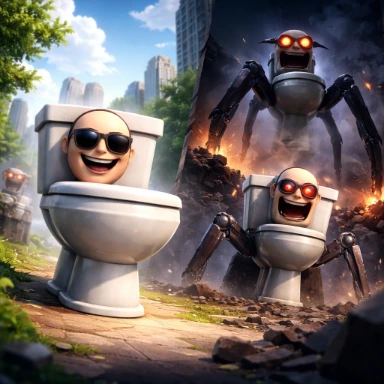
Same unit, completely different threat level depending on the game. That’s one of the most interesting things about how Skibidi games handle their rosters.
Normal Skibidi Toilets fill the cannon fodder slot in most tower defense titles. They spawn in waves, die fast, and exist to drain resources. Upgraded variants like the Large or Strider Toilet hit harder, take more punishment, and often require dedicated counters.
Cameramen sit on the opposite side. Most games cast them as placeable fighters or auto-attacking allies. TV Men and Speakermen tend to fill utility roles, offering support, slow effects, or area denial.
Titan-class units are almost always boss encounters. Their scale alone signals a phase-based fight with a serious health pool. A Skibidi Toilet that’s a basic enemy in one game can appear as a ranked nightmare exclusive in another.
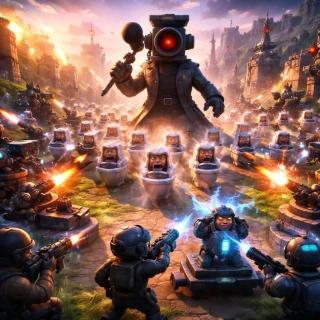
Every unit in these games carries a behavioral profile that forces a specific player response. Charging Skibidi Toilets punish static defenses, so players have to reposition towers or use knockback units to interrupt the rush before it reaches the base. Ranged variants demand early target priority since they deal consistent damage from outside most melee units’ reach.
Stun effects are particularly disruptive. A single large Cameraman boss that freezes nearby units on impact can collapse a defensive line fast, making cooldown timing on ability units the difference between holding a wave and losing one.
Some bosses spawn smaller infected units mid-fight, which forces a split-attention response. Saving burst damage for the boss while handling the spawns with cheaper units is the standard answer. Ignoring spawn management gets players eliminated quickly.
Fans already know the cast before they load into any Skibidi game, and that familiarity is doing real work. There’s no denying that recognizing a Giant Toilet on sight – or spotting a Cameraman unit across the map – instantly tells you something about the threat level and approach required. But recognition alone won’t carry you far. What actually separates experienced players from newcomers is understanding that the same character skin can mean completely different things depending on the game. A standard Toilet is a wave enemy in one mode and a tankier elite in another. Cameramen shift from allied fighters to player-controlled units depending on context. The real skill is reading role, size class, and behavior together – not just the design on screen.